


When it comes to Houttuynia cordata, it goes by many names—its scientific name is Houttuynia cordata, and it is also known as "fish mint". It grows mainly in southwestern China and is relatively rare in the north.
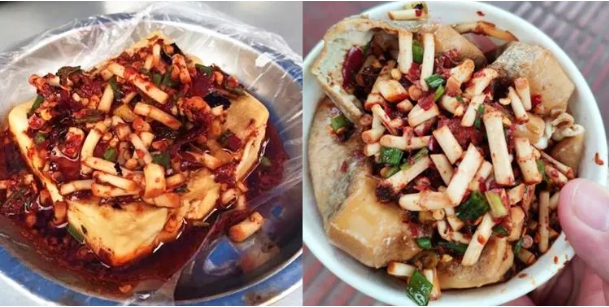
Hailed as the "king of vegetables," it is also highly controversial. Because of its strong, distinctive aroma, friends from the north who have tried it might frown, reminded of that overwhelmingly fishy taste that lingers endlessly in the mouth—trapped in an endless loop of that overpowering taste.
Source: Network
Of course, human joys and sorrows are not shared. If you ask people from Yunnan, Guizhou, Sichuan, or Chongqing, you'll get a completely different answer. Whether eaten raw in salads, used as a seasoning, or stir-fried, just one bite of Houttuynia cordata quickly fills your nose and mouth with its bold flavor, making any accompanying rice taste even better.
A Little Fun Fact: The "Southwest Quartet"—also known as the "Houttuynia brothers"—is a culinary alliance formed by Sichuan, Yunnan, Guizhou, and Chongqing (listed in no particular order; for convenience, they will be referred to in this way below).
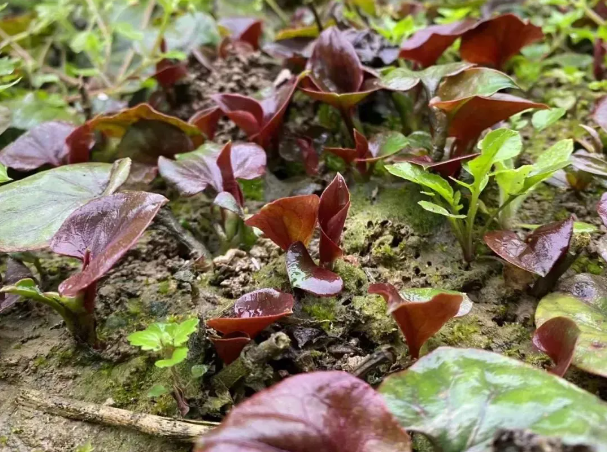
The leaves of Houttuynia cordata can be red or green, usually heart-shaped and vibrant in color. The roots sometimes have fine hairs and may carry a purplish-red tint, with a pronounced aroma.
In the eyes of true food lovers, wild Houttuynia cordata is the top choice. After digging it up, each stem is carefully cleaned—removing weeds, mud, and fine root hairs—to ensure the best texture when eaten.
Source: Network
It’s also important to pick Houttuynia at just the right maturity: too old and it becomes tough like chewing wood; too young and it turns mushy in the mouth, losing its refreshing crunch.
Then, use your fingernail to pinch the stem—if it snaps easily, it’s perfect for cold salads, which best preserve Houttuynia’s original flavor. Stir-frying it with meat also brings out a unique taste. Whether you prefer more root or more leaf is entirely up to personal preference.
The entire Houttuynia plant is edible, and how it’s eaten can be divided into three styles: roots only, leaves only, or both together—clearly distinguished and thoroughly enjoyed.
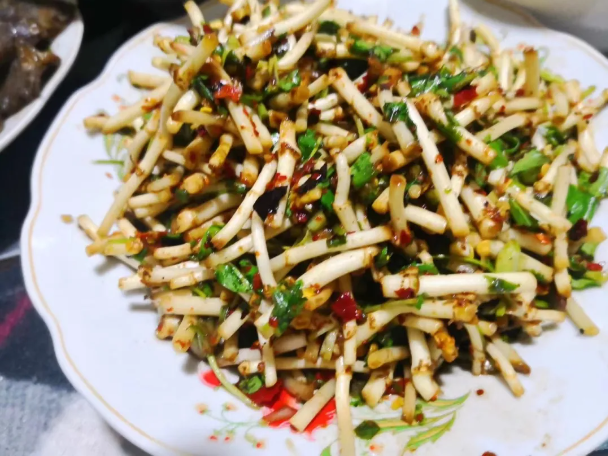
For the leaves, choose tender ones—best served cold-tossed. Mix equal parts root and leaf, then dress with either chili oil or Guizhou’s distinctive roasted chili flakes, along with scallions, ginger, garlic, and Sichuan pepper powder, stirring until well combined.
Source: IMTA
Slightly older leaves can be stir-fried with fresh or cured meat, creating another flavorful dish. Through skillful cooking and seasoning, Houttuynia and meat enhance each other with their unique aromas.
In hotpot and skewer restaurants across Yunnan, Guizhou, Sichuan, and Chongqing, Houttuynia can’t escape being bundled into small portions and dipped into boiling broth! Cooking other ingredients in the same broth afterward adds yet another layer of flavor.
Source: IMTA
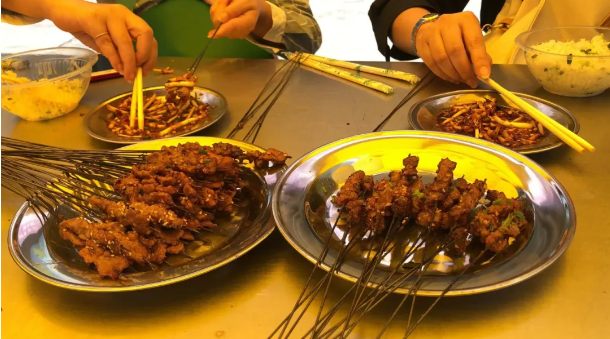
At barbecue stalls, after meat skewers have been grilled over smoky flames, they’re topped with generous spoonfuls of chili and chopped Houttuynia. The temperature of the meat cools slightly as the aroma of Houttuynia mingles with it, making every bite irresistible and encouraging you to eat a few more skewers.
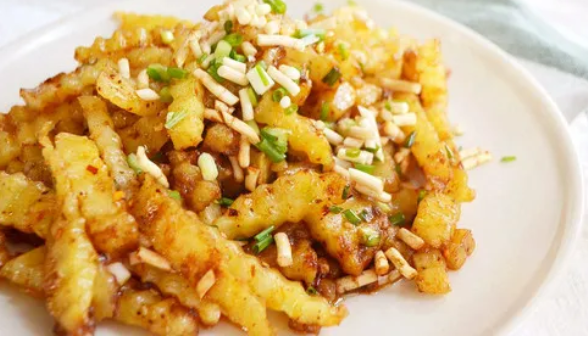
In "langya" potatoes (wavy-cut fried potatoes), Houttuynia is the essential, the divine touch, the finishing stroke—it transforms the ordinary into something extraordinary! Without Houttuynia, even the most delicious potatoes lose some of their charm.
Source: Network
A dipping sauce with Houttuynia has soul. No matter what ingredient you dip into it, that distinctive fresh fragrance captures your taste buds completely—simply irresistible.
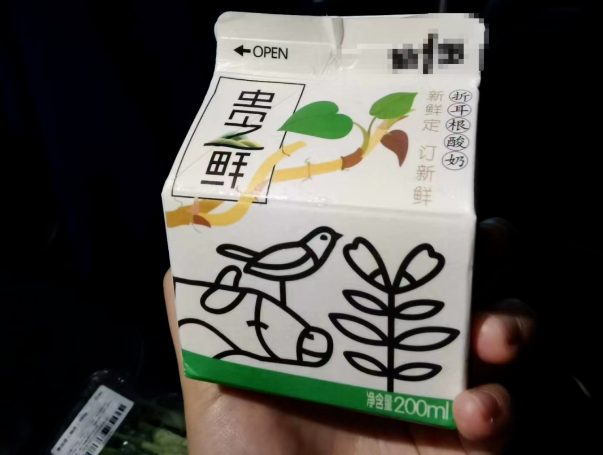
And that’s not all—there are even more elevated ways to enjoy it: Houttuynia milk tea, Houttuynia yogurt, Houttuynia coffee… As for the taste, that’s entirely up to personal preference.
Source: IMTA
Editor Ⅰ: Zhang Wenwen
Editor Ⅱ: Bao Gang
Editor Ⅲ: Liu Guosong