


Ham, in a broad sense, refers to a cured meat product made primarily from the hind leg of a pig (or other animals), involving processes such as salting, smoking, fermenting, and drying. It is essentially one of humanity's oldest food preservation techniques, aiming to preserve meat for extended periods without modern refrigeration while imparting a unique flavor.
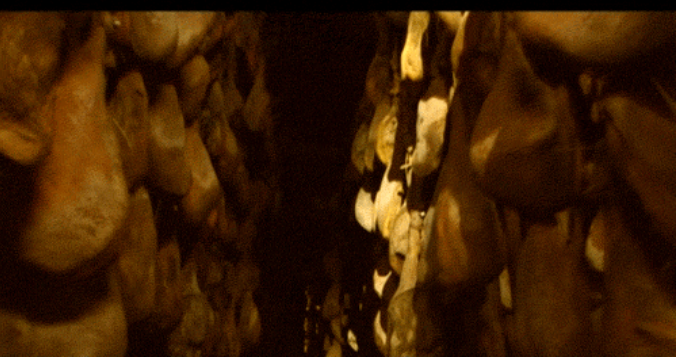
Image source: James's Kitchen
When we savor a slice of ham, what we chew is perhaps not just a gift of time, but also the breath of the wilderness and the sedimentation of sunlight.
Why do mountains always seem to nurture top-tier hams? The answer lies in a collaboration of favorable conditions.
Mountain Climate: A Natural Slow-Cooker for Aging
Unlike plains with extreme heat or cold, mountain climates act more like a patient "master craftsman." Summers aren't too hot, winters aren't too freezing, allowing the ham to rest quietly. Day by day, through alternating temperatures, the internal fats and meat slowly, gradually transform, developing deep, mellow aromas and umami, rather than being quickly dried out or frozen. That unhurried temperature and humidity are a natural "slow-brewing" environment difficult to replicate in factories.
The Role of Wind: The Invisible Flavor Sculptor
Pure, consistent, and moderately flowing dry air currents in the mountains are crucial. They not only accelerate the evaporation of surface moisture for natural drying but, more importantly, carry away excess moisture and potential off-odors produced during fermentation, ensuring the ham "breathes" smoothly and maintains pure flavor. For example, China's Jinhua Ham relies on the dry north winds of autumn for its "intense sun-drying." The wind's direction, speed, and dryness directly participate in shaping the ham's final flavor profile.
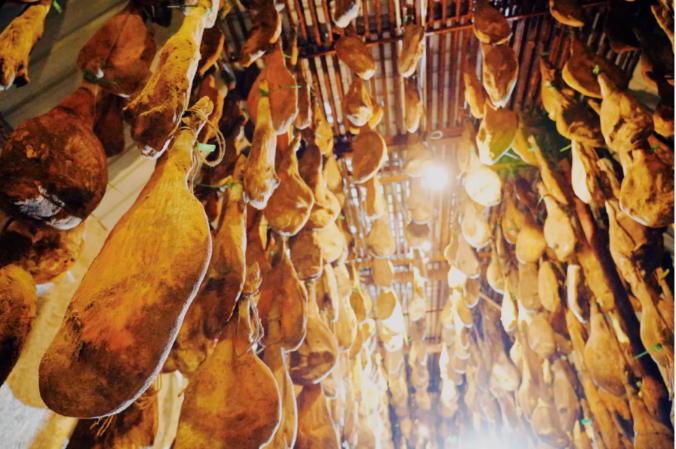
Image source: James's Kitchen
The Mountain's Bounty: The Source Code of Flavor
The pig's diet determines the quality of the ham's fat and its flavor precursors. Pigs raised on mountain pastures or free-ranging in forests have diets rich in polyunsaturated fatty acids and aromatic compounds. For instance, Spanish Iberian Black Hoof Pigs fed on acorns have fat with very high oleic acid content, resulting in a smooth texture and nutty sweetness; the pigs used for Italy's Parma Ham are fed whey and grains, establishing its mild milky base; the pigs for China's Nuodeng Ham often eat wild grasses and mixed grains from the mountains, while the minerals in Nuodeng salt provide a unique micro-environment for fermentation. All this ultimately translates into distinctive flavor imprints in the ham.
Human Wisdom: A Dynamic Dialogue with Terroir
Centuries-old techniques (such as salt quantity, curing timing, drying angle, fermentation duration) are not rigid dogma but the crystallization of local artisans' wisdom to "adapt to the time, place, and specific ham." They deeply understand and respect the local microclimate (e.g., avoiding rainy seasons, utilizing specific wind directions), tightly integrating the technical procedures with natural rhythms. Ultimately, a top-tier ham is the joint productof a specific pig breed, raised on a specific mountain diet, processed with specific techniques, and aged in a specific climate. It is a living name card and a concentrated taste of its place of origin—its terroir.
Editor Ⅰ: Zhang Wenwen
Editor Ⅱ: Bao Gang
Editor Ⅲ: Liu Guosong